This help explains the options available in WPRentals Theme Options → Map Configuration.
From this section, you can choose the map system, configure map autocomplete, manage map pins, control pin performance, and generate the pin files used by the theme.
Map General Settings
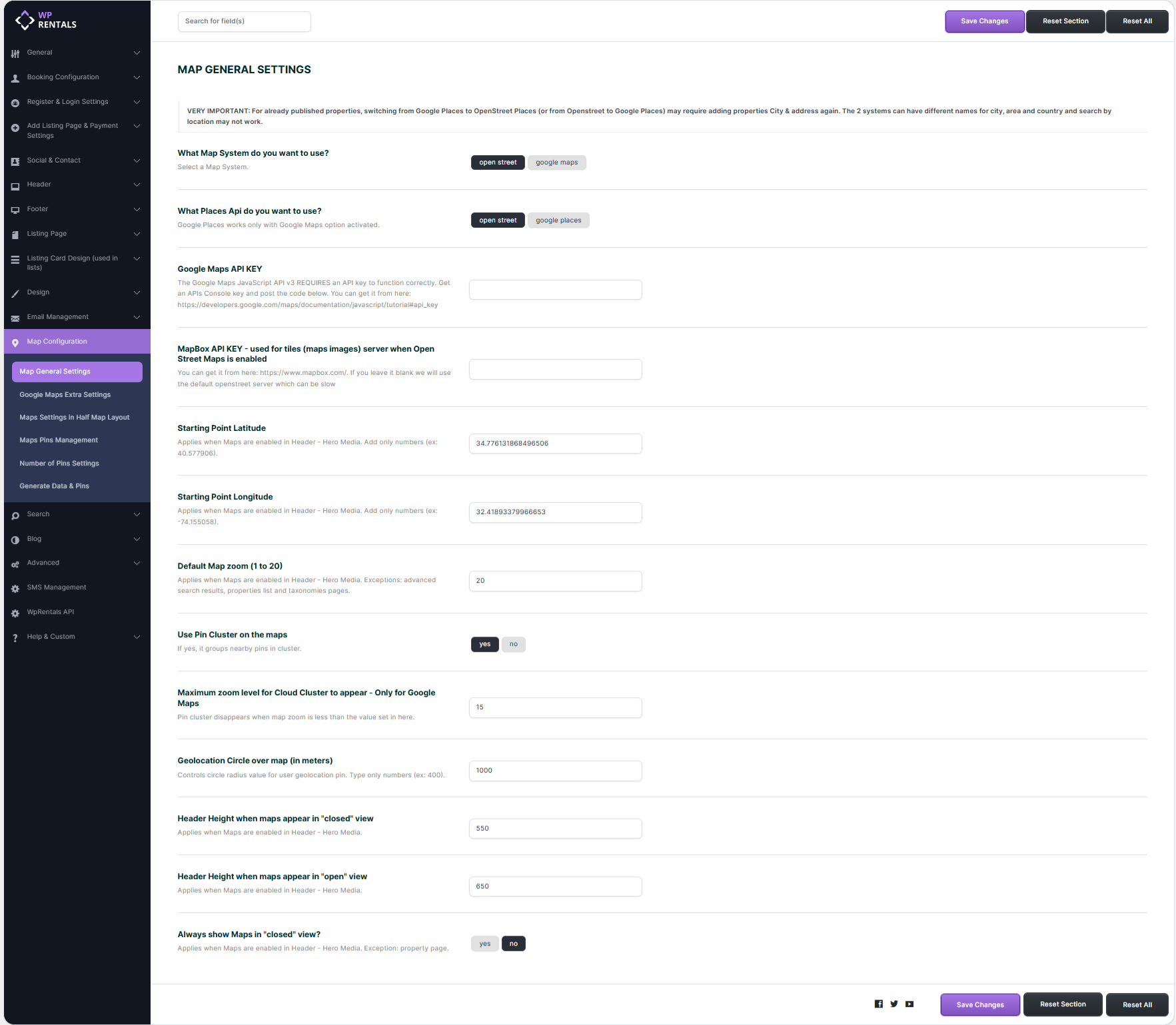
The Map General Settings section controls the main map system, autocomplete provider, map coordinates, zoom, clustering, geolocation, and map height.
Map System Type
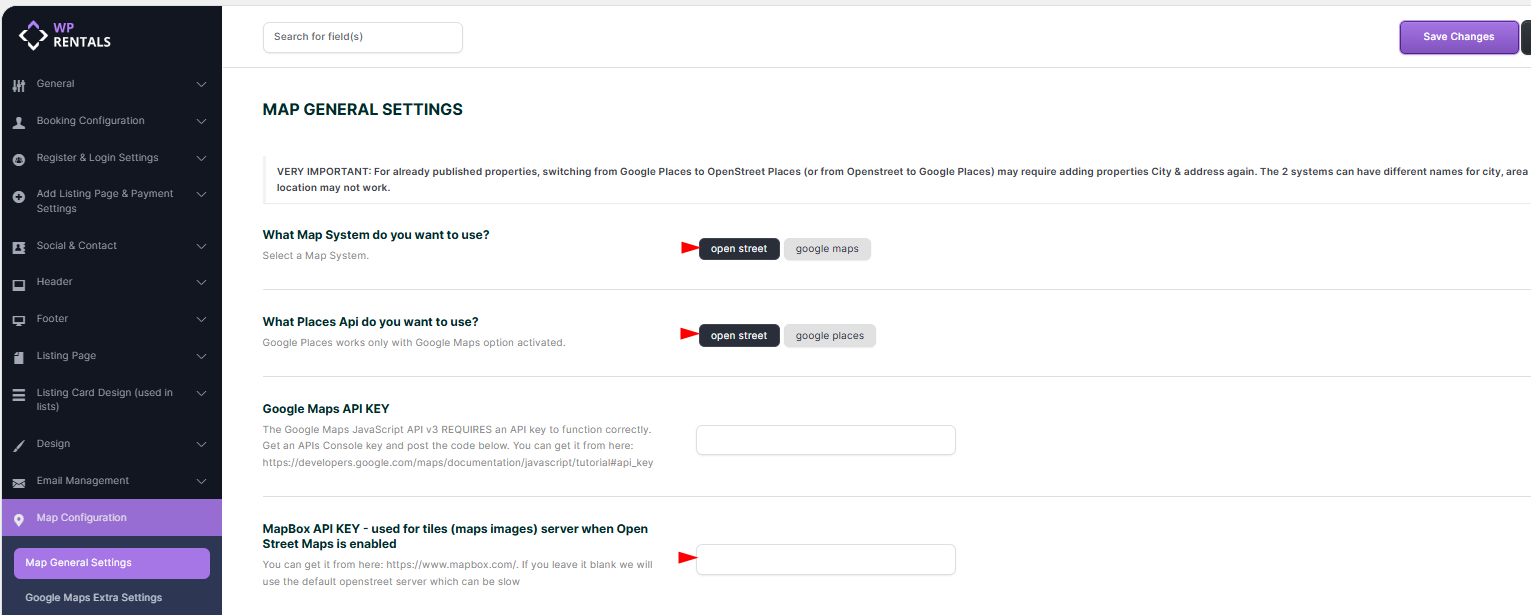
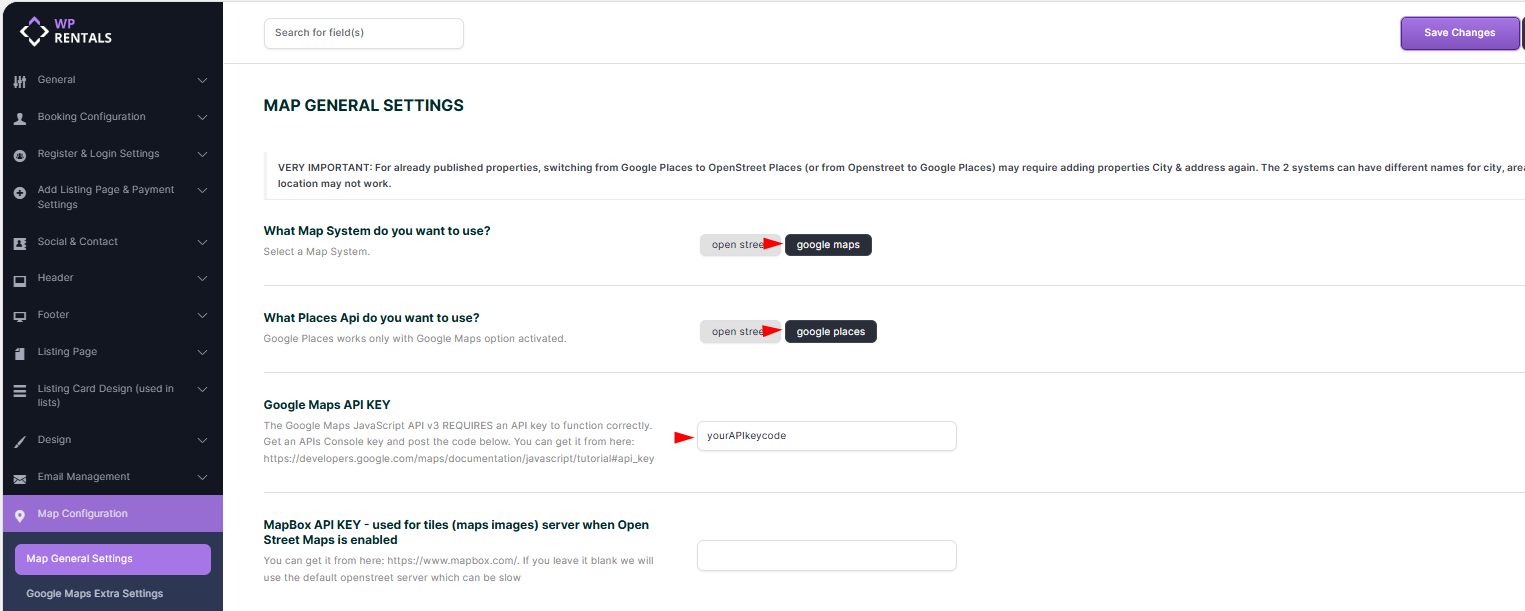
The Map System Type option lets you choose which map system the theme will use.
Available options:
- OpenStreetMap
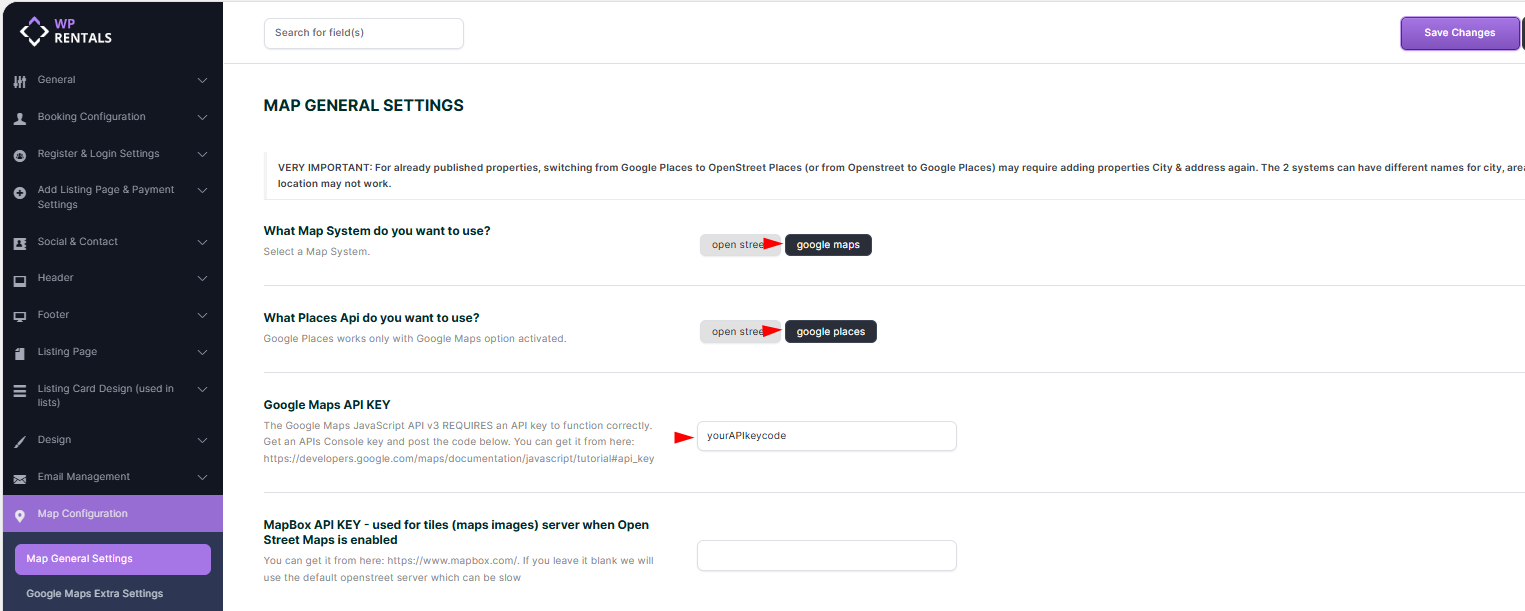
- Google Maps
OpenStreetMap settings
OpenStreetMap can be used without a Google Maps API key.
- No Google API key is required.
- You can optionally add a MapBox API key for faster map tile loading.
- If no MapBox API key is added, the default OpenStreetMap tile server is used.
- Street View is not available with OpenStreetMap.
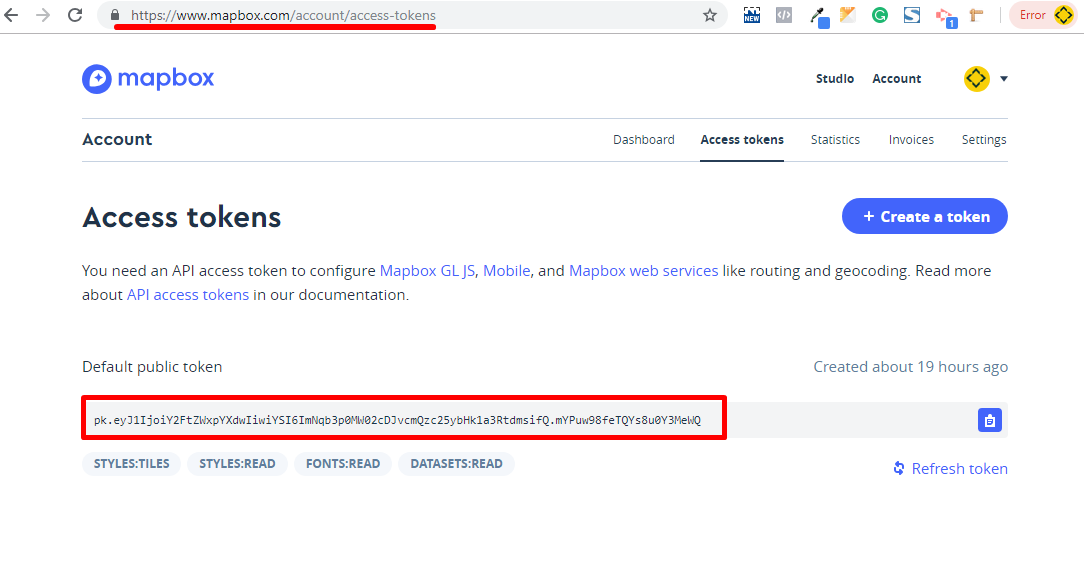
To use MapBox, create an account at MapBox, then copy your public token and add it in the theme settings.
Google Maps settings
Google Maps requires a Google Maps API key.
- You need a Google Cloud account.
- Billing must be enabled in Google Cloud.
- The required APIs must be enabled for the key.
- Always check Google Cloud directly for current pricing and usage limits.
Help guide:
How to generate and configure a Google Maps API key
Places API Type
The Places API Type option controls which provider is used for location autocomplete in search and submission forms.
Available options:
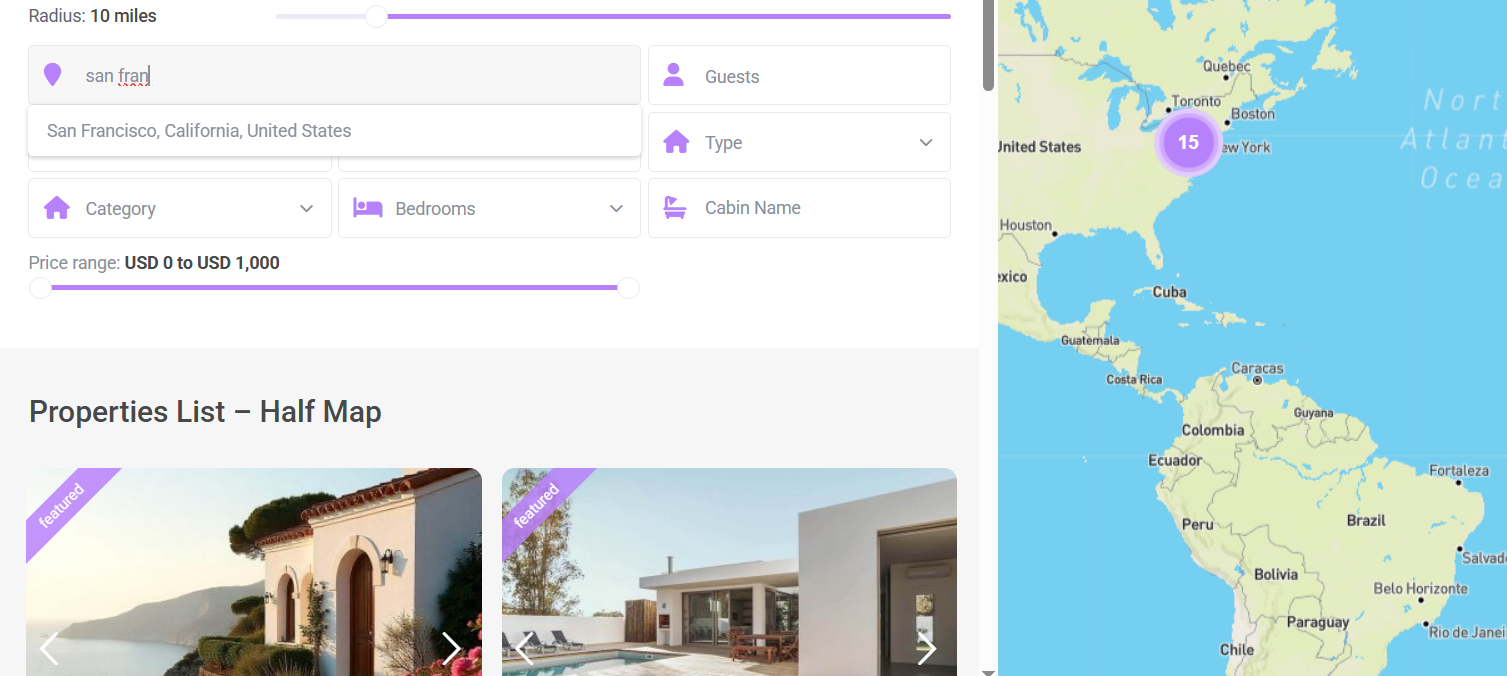
- OpenStreet Places
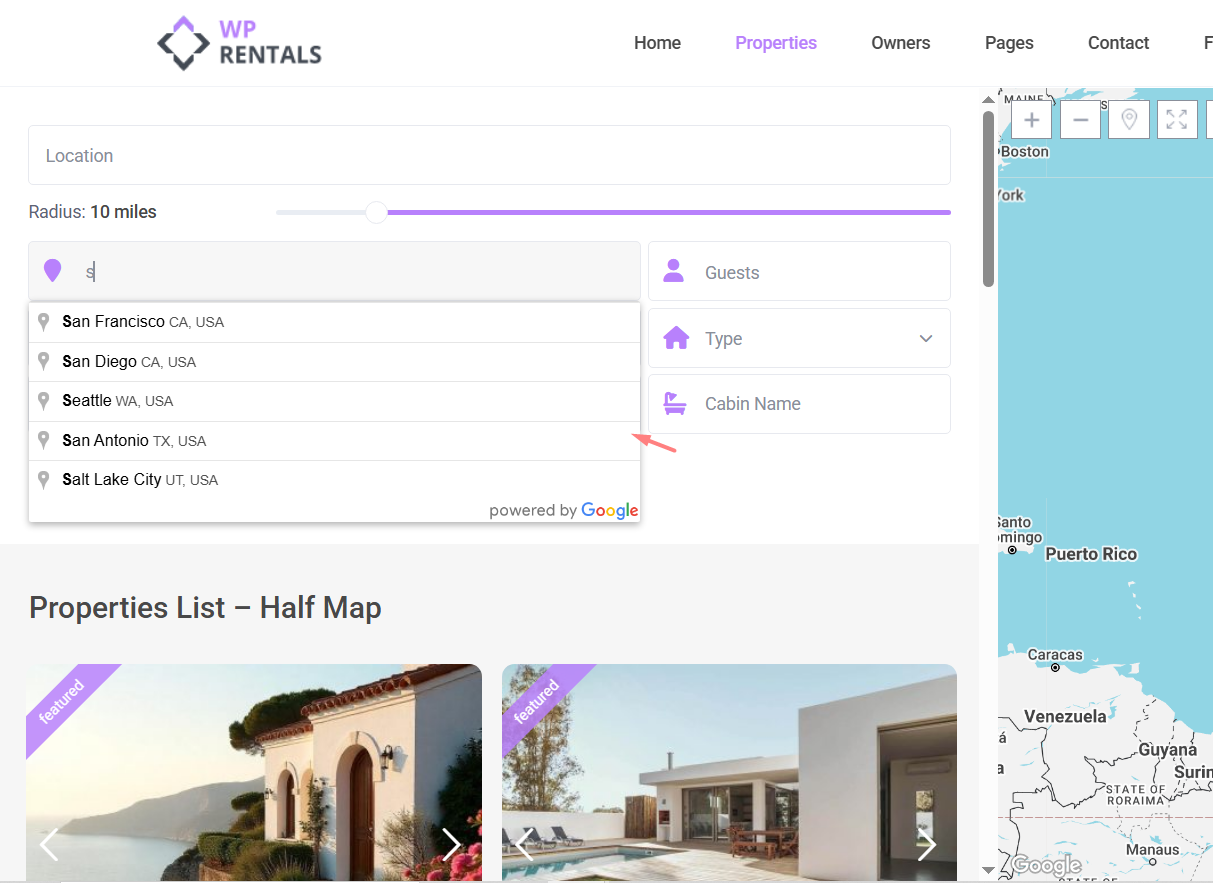
- Google Places
OpenStreet Places
- Available starting with theme version 3.3.
- It replaces the deprecated Algolia Places integration.
- Enable the option to use OpenStreet location suggestions.
- Results depend on OpenStreet location data.
Google Places
- Requires a Google Maps API key.
- The Places API must be enabled in Google Cloud.
- Recommended when using Google Maps as the map system.
Map Coordinates
The Map Coordinates settings define the default latitude and longitude used as the map center.
These coordinates apply mainly to the global map header when it is used as Global Hero Media.
Help guide:
How to find latitude and longitude coordinates
Default Map Zoom
The Default Map Zoom option controls the default zoom level for maps used in the global header media and in the map with listings widget.
The value can usually be set between 1 and 20.
Pin Clustering
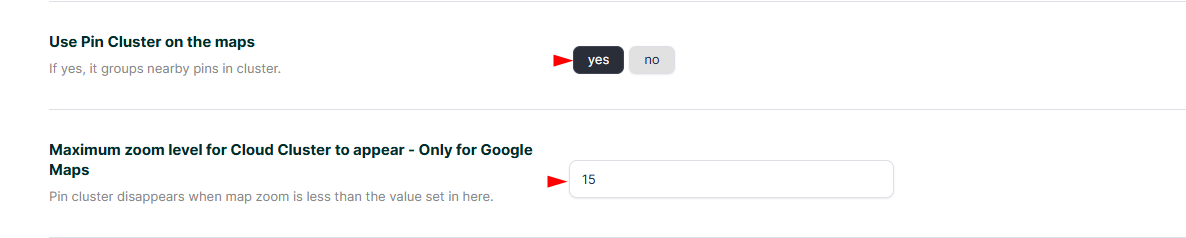
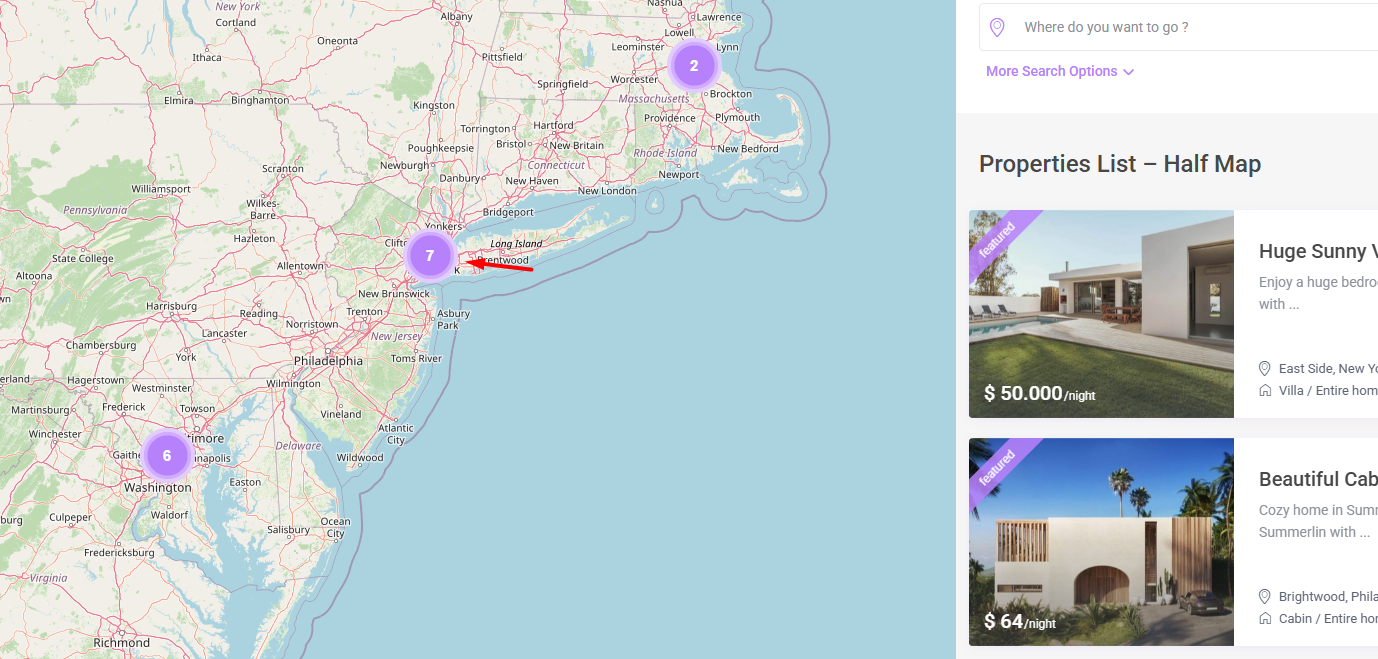
The Enable Pin Clustering option groups nearby property pins into a single cluster marker.
This improves map usability and performance when many properties are located close to each other.
Max Zoom Level for Cloud Cluster
The Max Zoom Level for Cloud Cluster controls when clusters stop showing.
When the map is zoomed in beyond this value, the cluster is disabled and individual pins are displayed.
Geolocation Circle
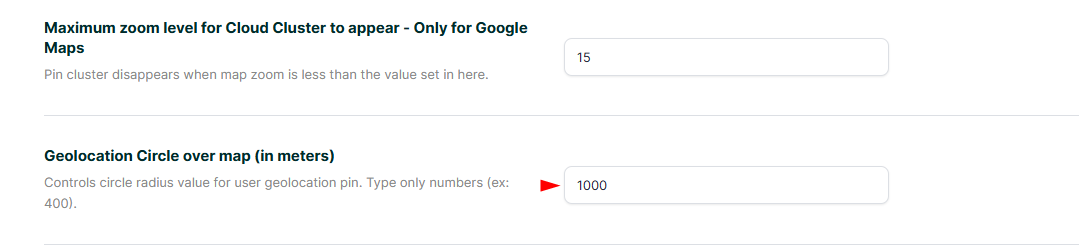
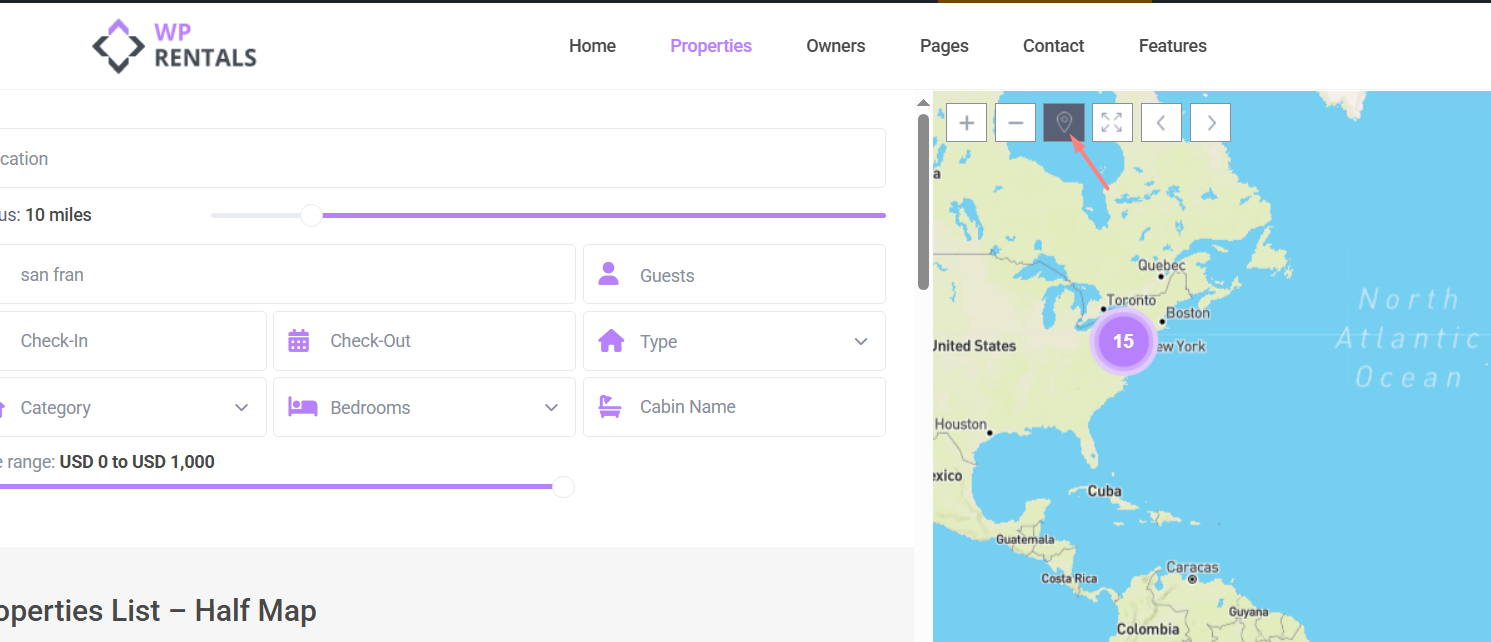
The Geolocation Circle setting controls the radius shown around the visitor location when geolocation is enabled.
The value is added in meters.
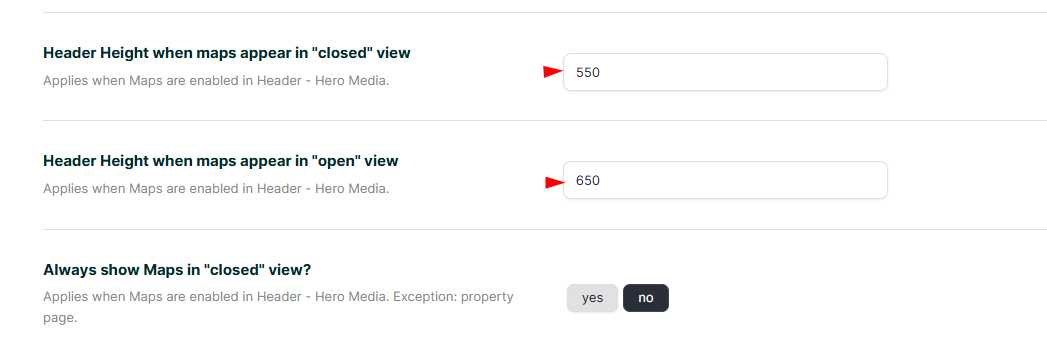
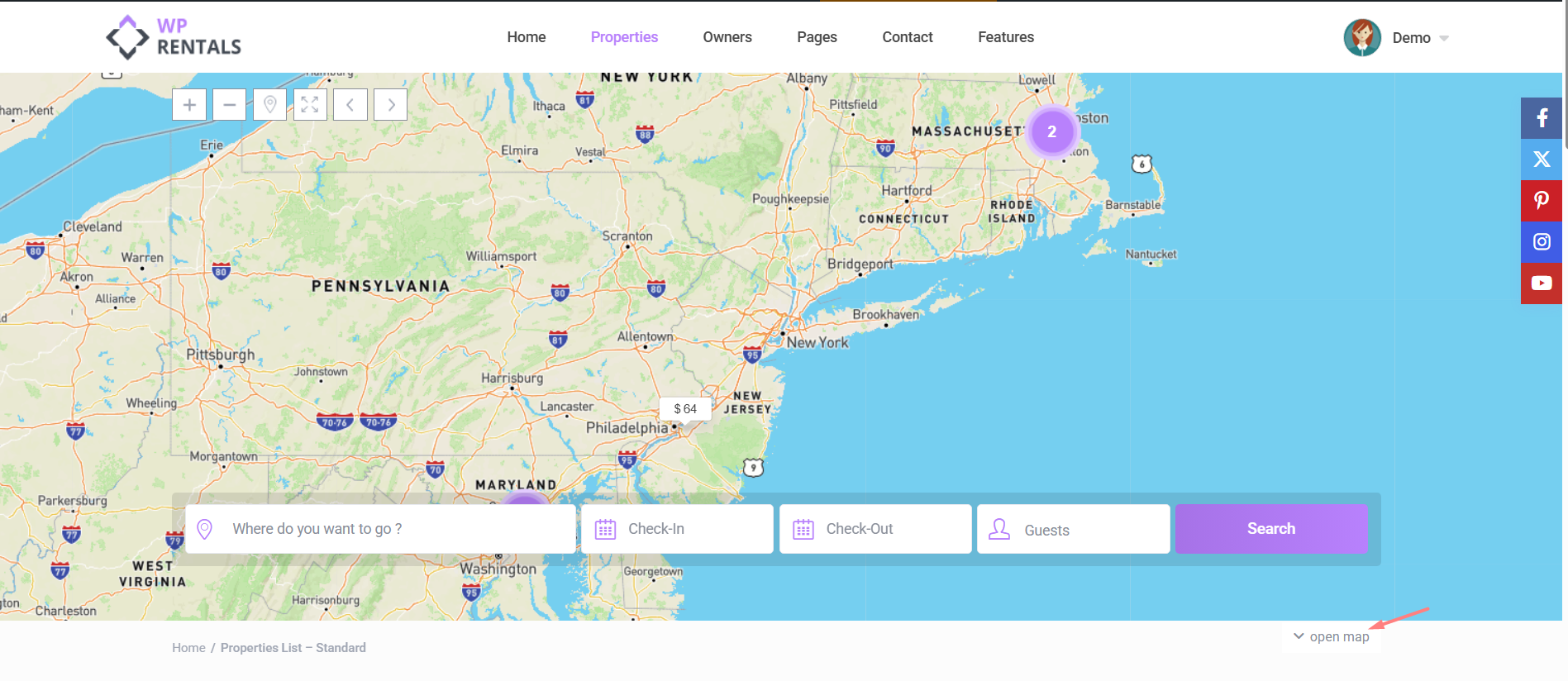
Map Height Settings
The Map Height settings control the height of the map used in the global header area.
Use these settings when you want to increase or decrease the visible map area in the header.
Google Maps Extra Settings
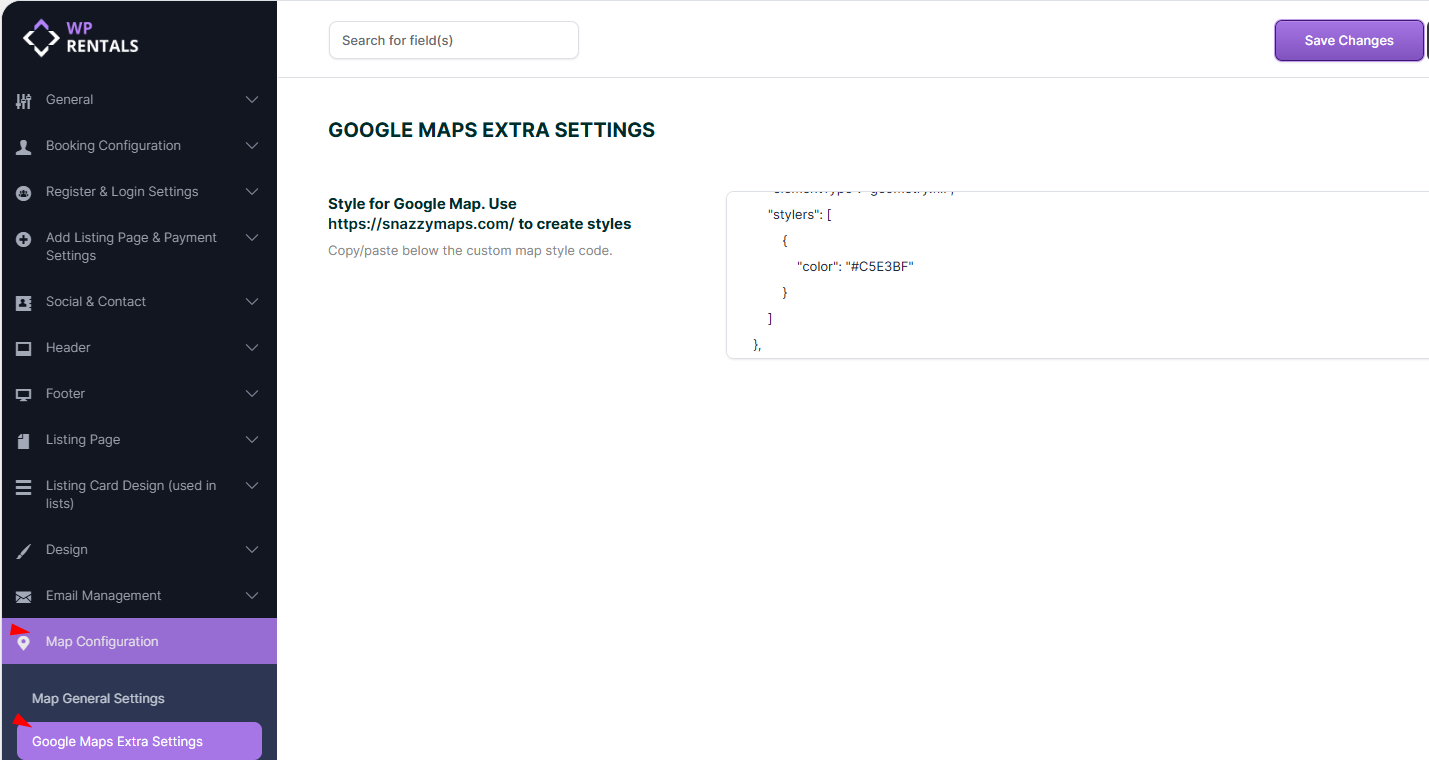
The Google Maps Extra Settings section lets you add a custom Google Maps style.
Styling Google Maps with Snazzy Maps
You can customize the appearance of Google Maps using JSON styles from Snazzy Maps.
- Go to Snazzy Maps.
- Choose or create a map style.
- Copy the JSON code provided by Snazzy Maps.
- Paste the code into Google Maps Extra Settings → Style for Google Map.
- Click Save Changes.
- Clear the theme cache, if needed.
Maps Settings in Half Map Layout
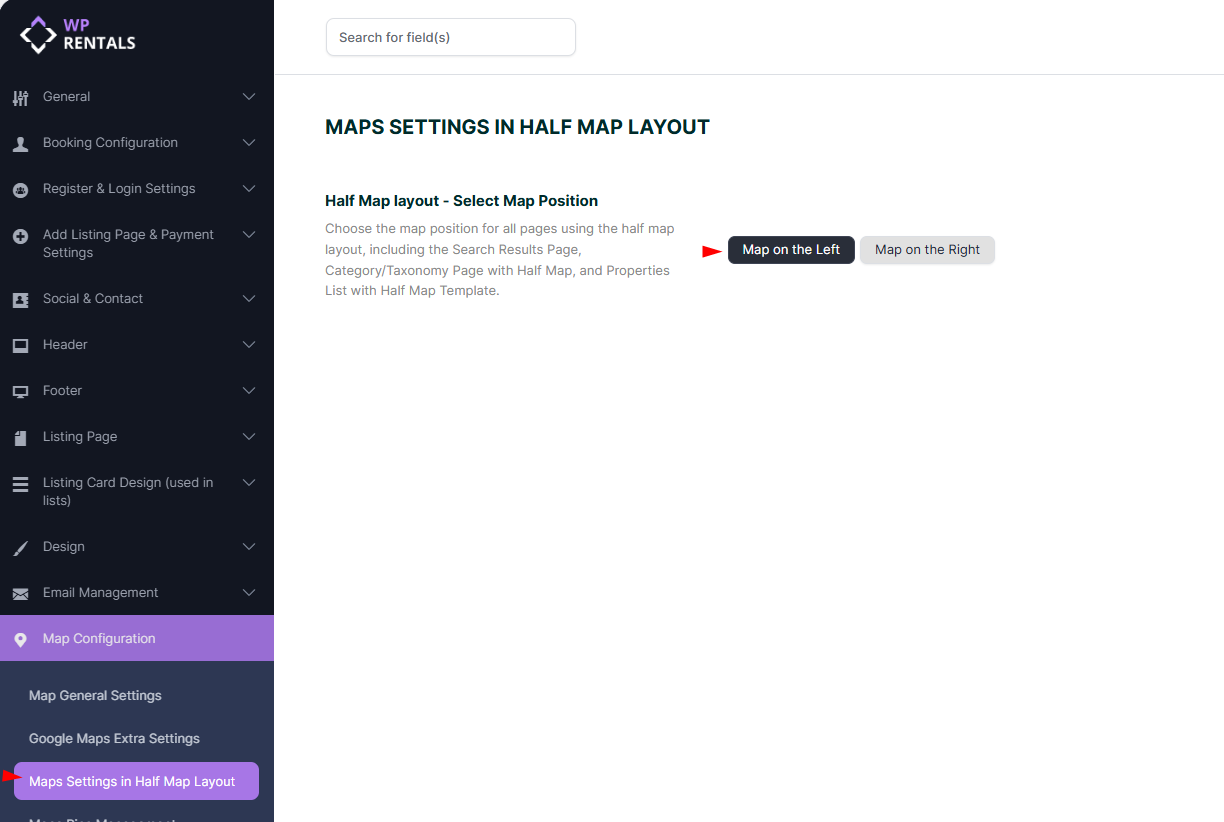
This section controls where the map is displayed on pages using the Half Map layout.
It applies to:
- Advanced Search Results pages using Half Map layout.
- Category and taxonomy pages using Half Map layout.
- Properties List pages using the Half Map template.
Available options:
- Map on the Left – Displays the map on the left side of the screen.
- Map on the Right – Displays the map on the right side of the screen.
Maps Pins Management
The Maps Pins Management section controls how map markers are displayed across the theme maps.
Pins help visitors identify listing locations, property types, prices, and category or action combinations directly on the map.
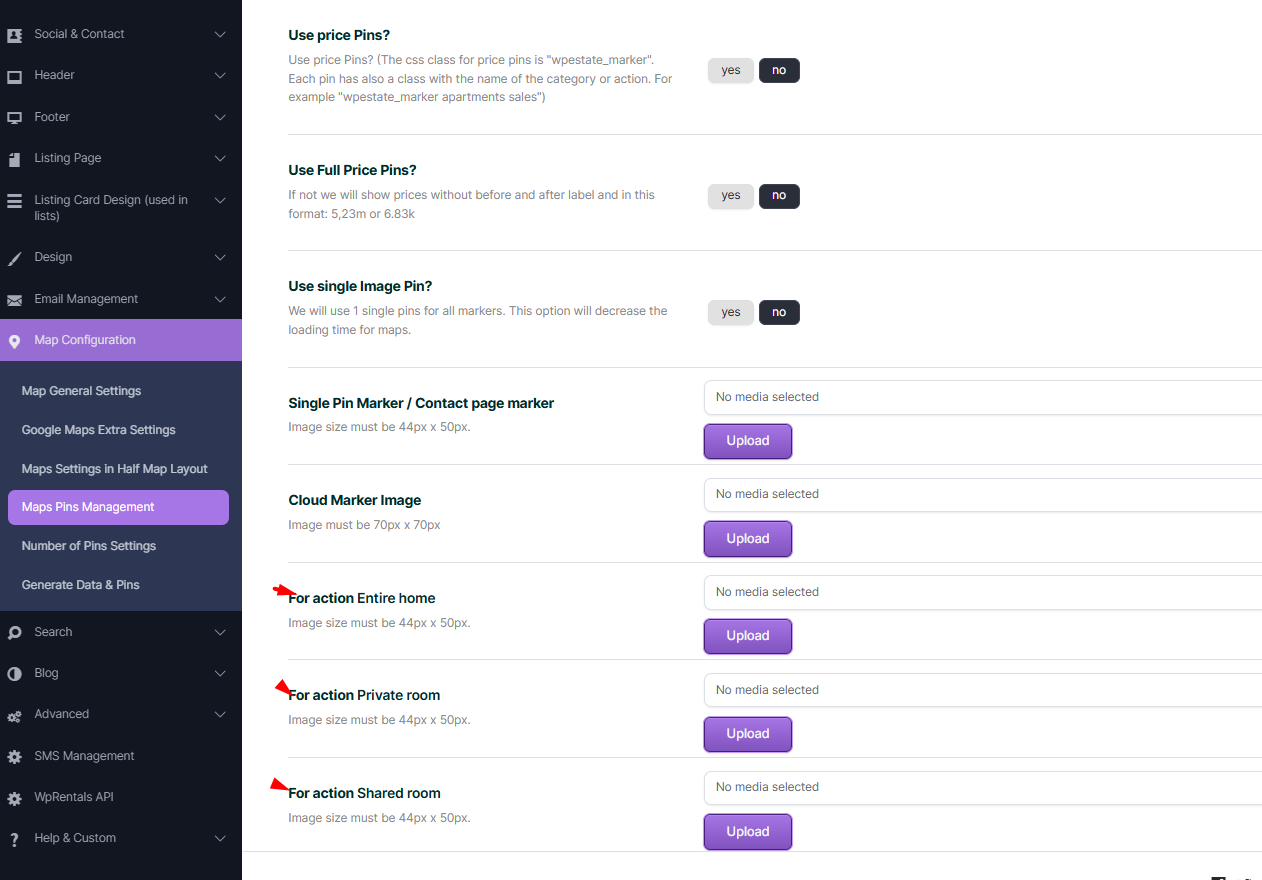
- Single Pin Marker: 44x50px
- Category/Action image pins: 44x50px
- Cloud Marker: 70x70px
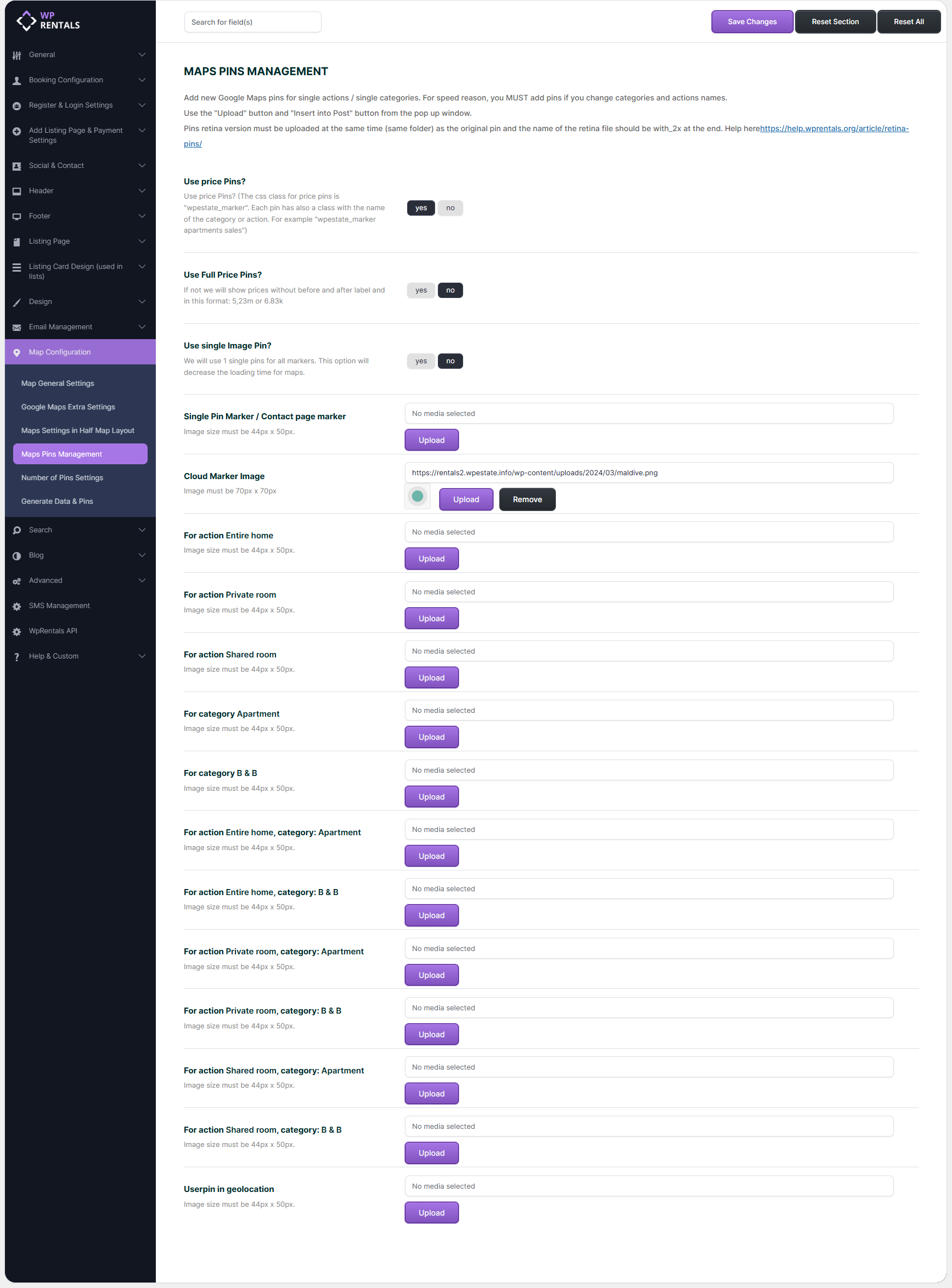
Price Pins
Use Price Pins?
When Use Price Pins? is enabled, map pins display the listing price inside the marker instead of showing a generic image pin.
This is useful for websites where visitors need to compare listings by price directly on the map.
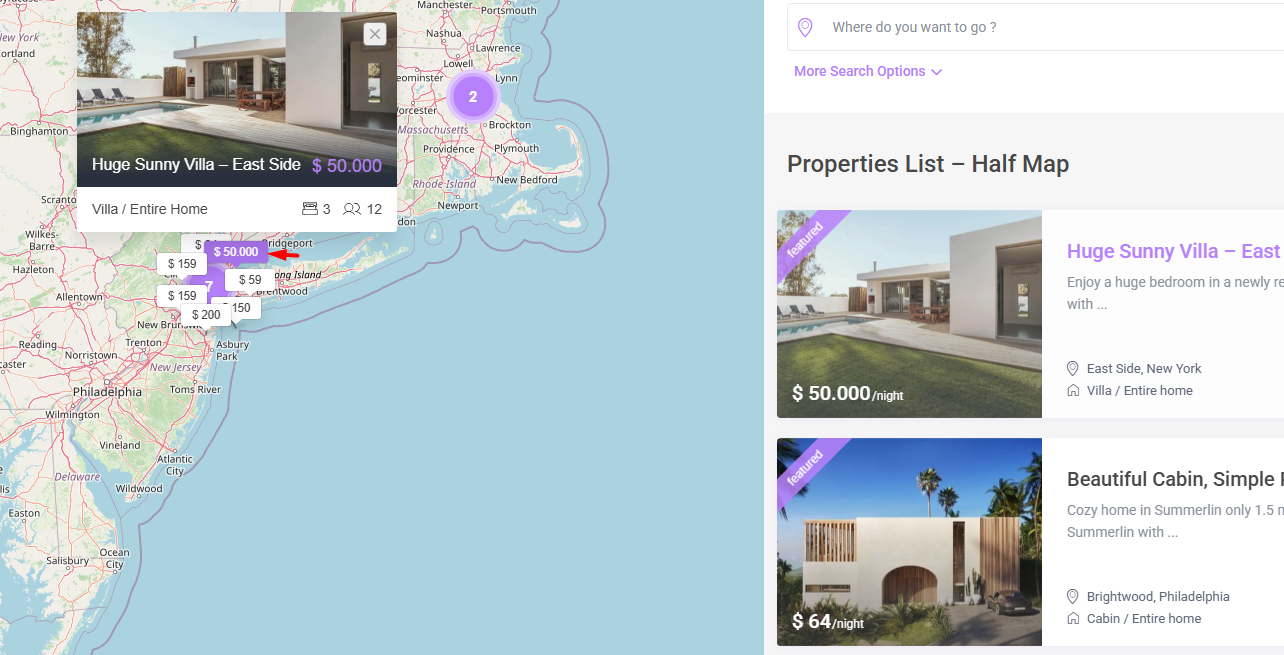
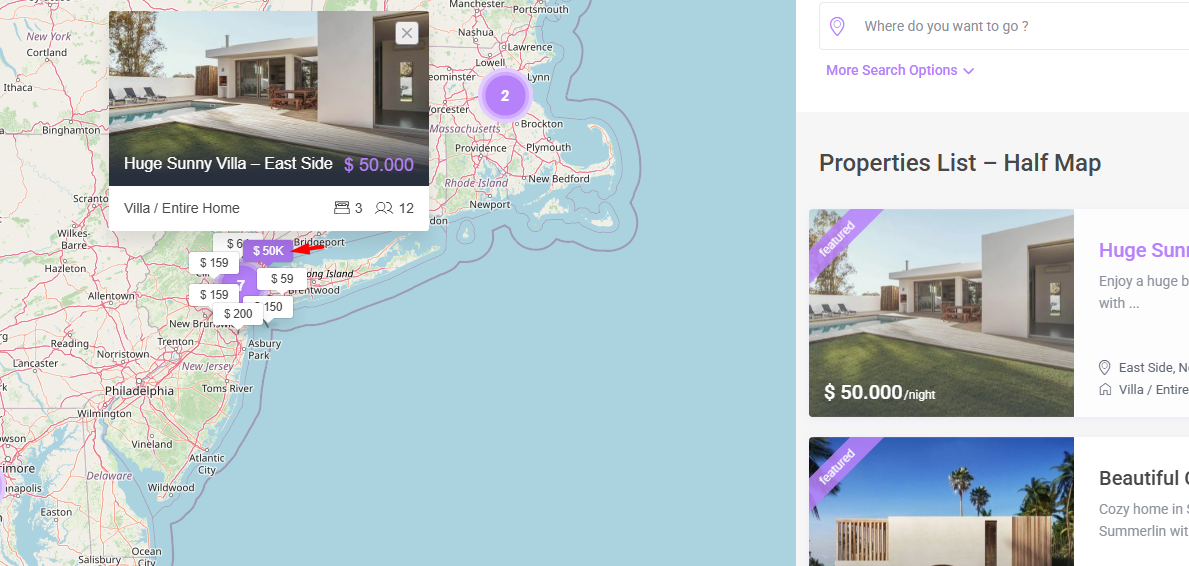
Use Full Price Pins?
This option controls how the price is displayed inside the pin.
- Yes – Shows the full price with the currency symbol.
- No – Shows a shortened or simplified price format.
Example of full price pins:
Example of shortened price pins:
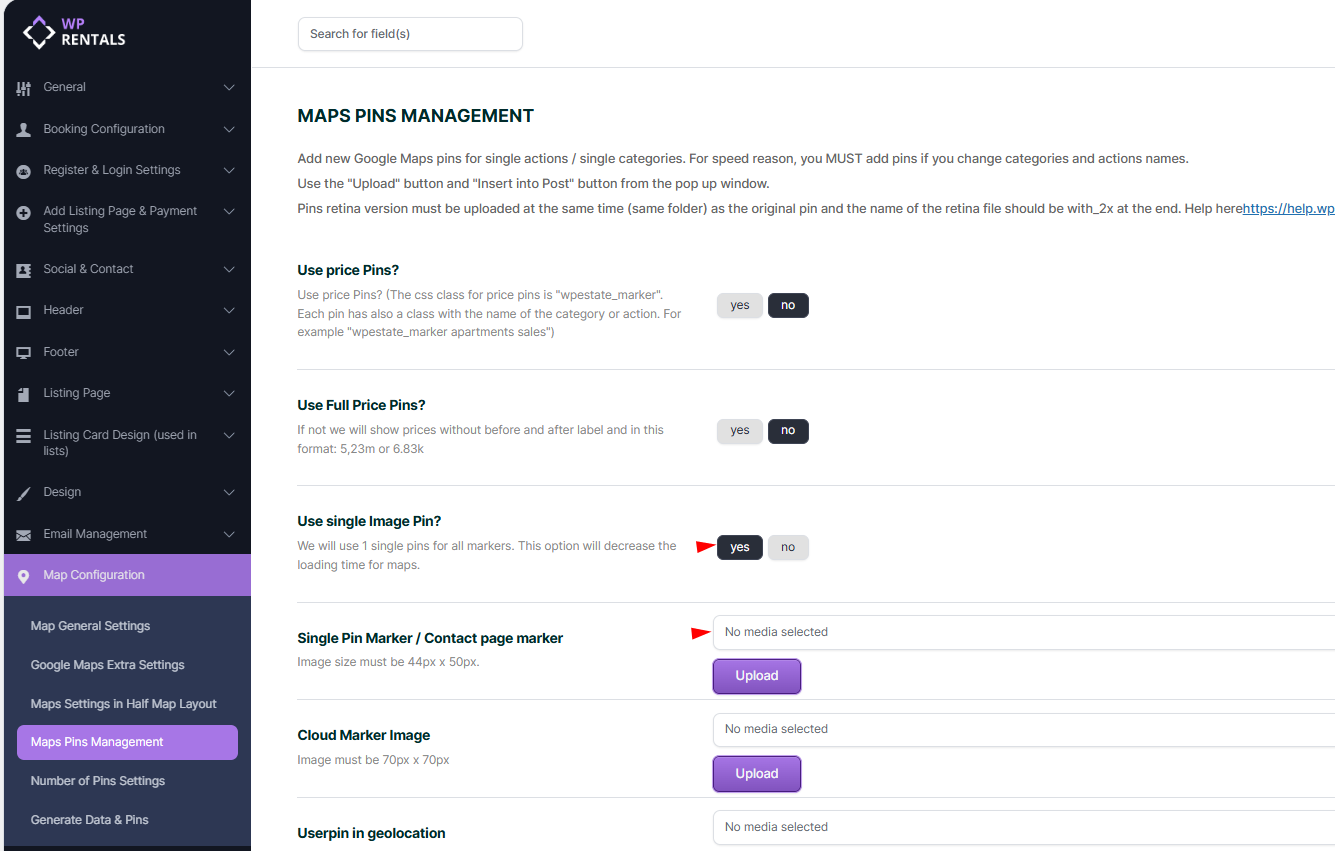
Single Image Pin
The Use Single Image Pin? option forces all listings to use one marker image, regardless of property category or action.
This is useful when you want a simple, consistent map design.
Cloud Marker Image
The Cloud Marker Image defines the image used for clustered pins.
When many listings are close together, the theme can group them into one cluster marker. The cloud marker image represents that group.
Pins per Category and Action
Use this section if you want different image pins based on property category and action combinations.
Image pins are used when:
- Use Price Pins? is set to No.
- Use Single Image Pin? is set to No.
For each property type and category combination, upload a pin image.
Example: Entire Home in Apartment can have a different pin from Private Room in House.
User Pin in Geolocation
The User Pin in Geolocation option defines the marker used to show the visitor current location when geolocation is enabled.
Retina Pins
If you want crisp pin images on high-resolution screens, upload a retina version of each pin image.
The retina image must:
- Have the same file name as the normal image.
- Include @2x at the end of the file name.
- Be stored in the same folder as the normal image.
Example:
- apartment.png
- [email protected]
Number of Pins Settings
The Number of Pins Settings section controls how many listing pins are loaded on maps and how the map pin data is retrieved.
These options are important for performance, especially on websites with many listings.
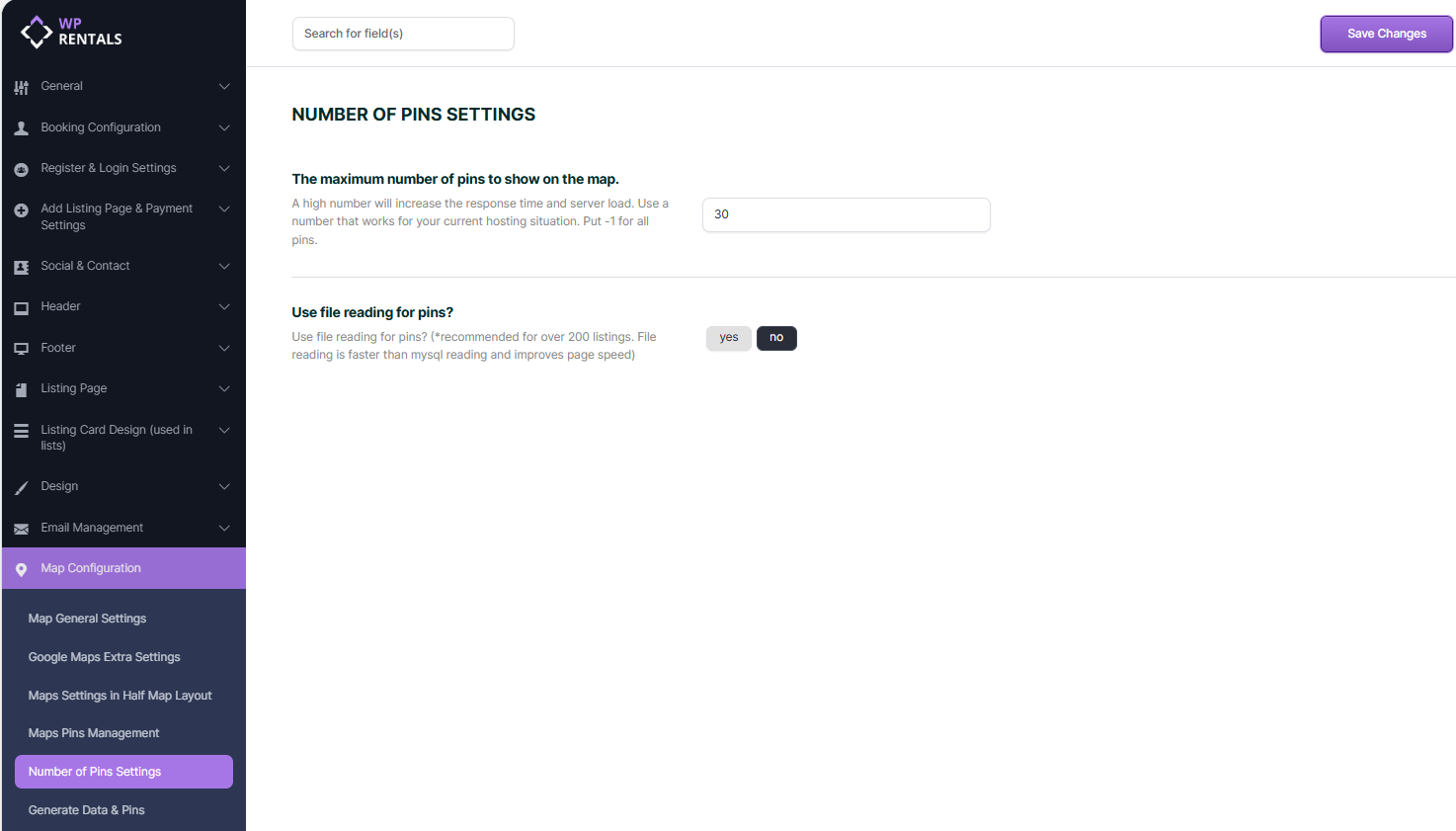
Maximum number of pins to show on the map
This option defines the maximum number of listing pins that can be displayed on a map at one time.
- Use a positive number, such as 30, to limit the number of pins.
- Use -1 only if you want to load all available pins and you have tested performance.
This setting can affect listing pages with maps, Half Map layouts, taxonomy map pages, and search result maps.
Use File Reading for Pins
The Use File Reading for Pins? option controls how pin data is loaded.
- Yes – Pin data is read from pre-generated files.
- No – Pin data is retrieved directly from the MySQL database.
When file reading is enabled, the theme avoids repeated database queries and can improve page load speed.
This option is strongly recommended for websites with more than 200 listings, shared hosting, or high traffic.
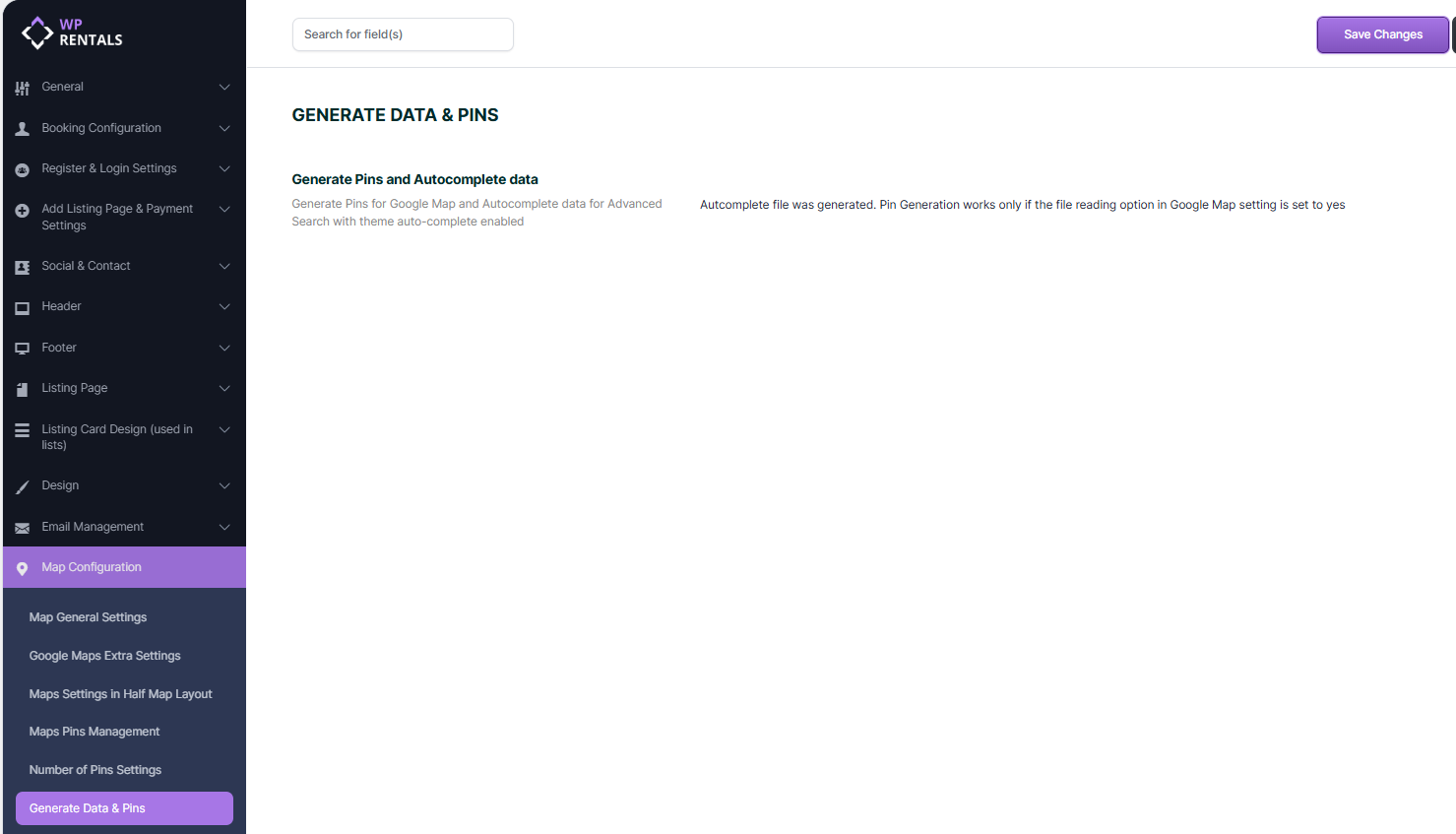
Generate Data & Pins
The Generate Data & Pins section creates or refreshes the files used by the map system.
Use this option after:
- Adding new listings.
- Deleting listings.
- Updating listing locations.
- Changing categories or actions used for pin images.
- Changing map pin settings.
- Enabling file reading for pins.