
General Performance Recommendations for WPRentals
This article lists general recommendations to help improve the performance of a WPRentals website.
Website speed depends on several factors, including hosting quality, active plugins, image size, cache setup, map settings, database size, and how much dynamic content is loaded on each page.
System Requirements
To use WPRentals correctly, make sure your setup meets the theme requirements.
- WordPress: Version 6.0 or higher
- PHP: Version 8.0 or higher
- PHP memory limit: 256MB or higher recommended
- HTTPS/SSL: Recommended for live websites, bookings, payments, and user accounts
Keep WPRentals, WordPress, and Plugins Updated
Always use the latest available version of WPRentals, WordPress, and the required theme plugins.
Updates can include:
- performance improvements
- security fixes
- compatibility updates
- bug fixes
- new features
Enable WPRentals Cache
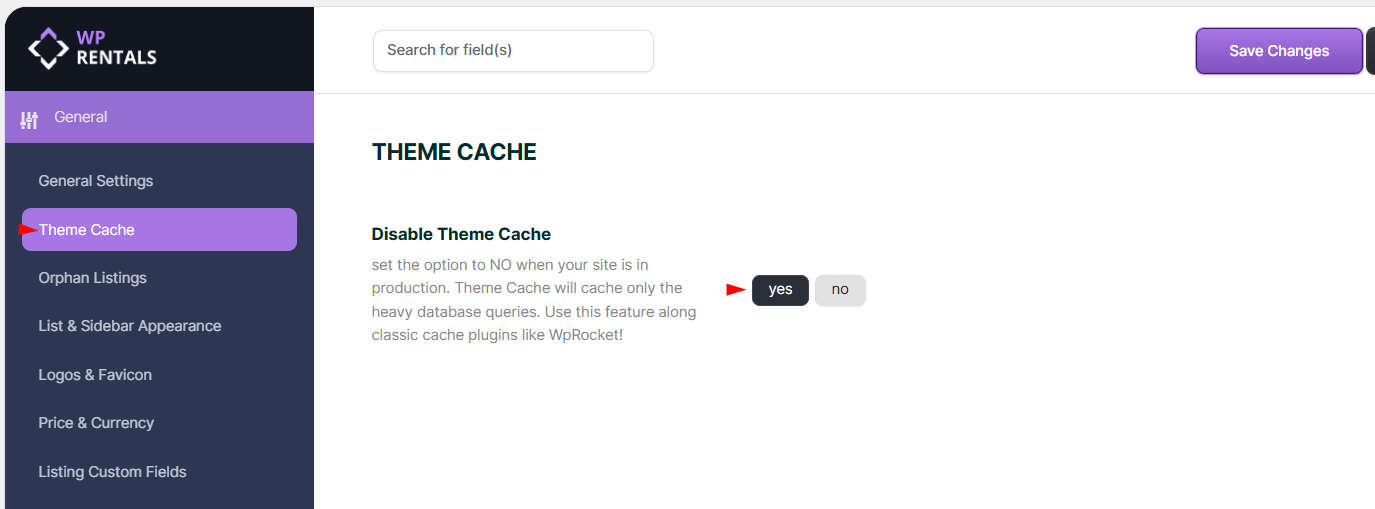
WPRentals includes a built-in caching system that optimizes key theme elements, such as property units, property lists, and widgets.
This cache helps reduce repeated database requests and improves page loading speed.
The WPRentals cache automatically refreshes every 4 hours.
Important: Do not disable the WPRentals theme cache on a live production website unless you are testing or troubleshooting. A general cache plugin cannot fully replace the theme cache because the theme cache is designed for WPRentals-specific elements.
Use a WordPress Cache and Optimization Plugin
Besides the WPRentals theme cache, you can also use a general WordPress cache and optimization plugin for page cache, browser cache, CSS/JS optimization, and other performance options.
One commonly used option is WP Rocket.
The video at the top of this article explains general WP Rocket optimization recommendations.
Important: Cache and optimization settings must be tested carefully. Do not enable all optimization options at once. Some CSS/JS optimization settings can conflict with maps, calendars, booking forms, login/register popups, or Elementor sections.
Recommended Cache Testing Process
- Enable page cache first.
- Clear cache and test the website.
- Enable one optimization option at a time.
- After each change, test important pages and user actions.
- If something breaks, disable the last optimization option enabled.
Important pages to test:
- Homepage
- Property page
- Search results page
- Booking form
- Login and register popups
- User dashboard pages
- Checkout/payment flow, if used
- Mobile layout
Optimize Images
Large images are one of the most common reasons for slow loading pages.
Before uploading images, resize them to a reasonable size and compress them.
You can use image optimization tools or plugins such as:
- Smush
- ShortPixel
- Imagify
- TinyPNG
For best results, avoid uploading very large original images directly from a camera or phone without resizing them first.
Add Retina Logo
A retina display has more pixels per inch than a standard screen. To keep your logo sharp on high-density screens, upload a higher-resolution retina version of your logo.
The retina logo is usually 2x the size of the normal logo.
Without a retina logo, high-density screens may stretch the standard logo, which can make it look blurry or pixelated.
The retina file should use the same name as the regular logo, with _2x, _3x, or _4x added at the end of the filename.
Example:
logo.png
logo_2x.png
Upload the retina logo in Media. Ideally, upload it at the same time as the regular logo so both images are saved in the same uploads folder.
Check Property Pin Images
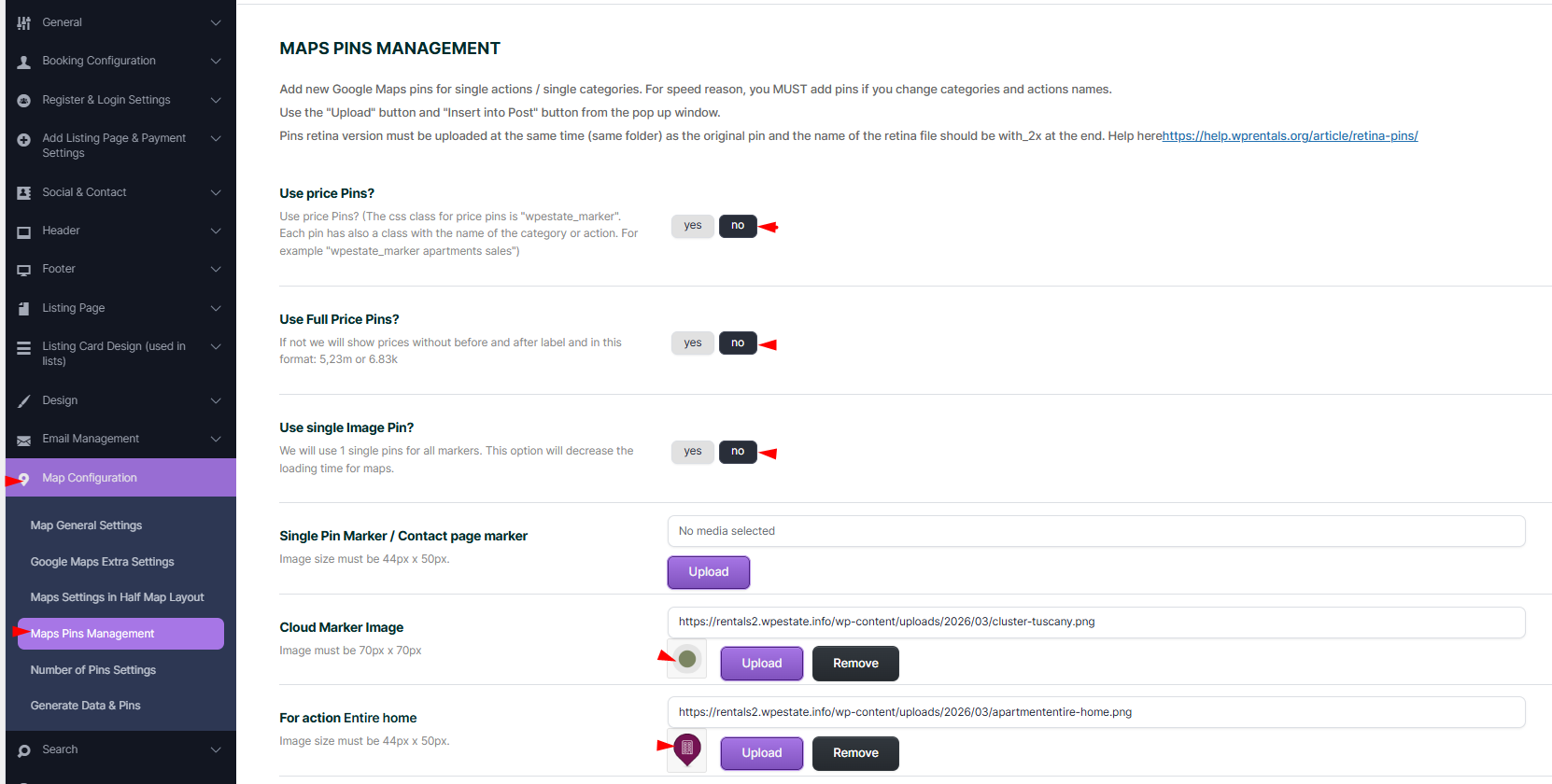
If you do not use price pins, make sure your property map pins are uploaded correctly.
Missing or broken pin images can create unnecessary browser requests or display issues on map pages.
Enable “Read from File” for Pins
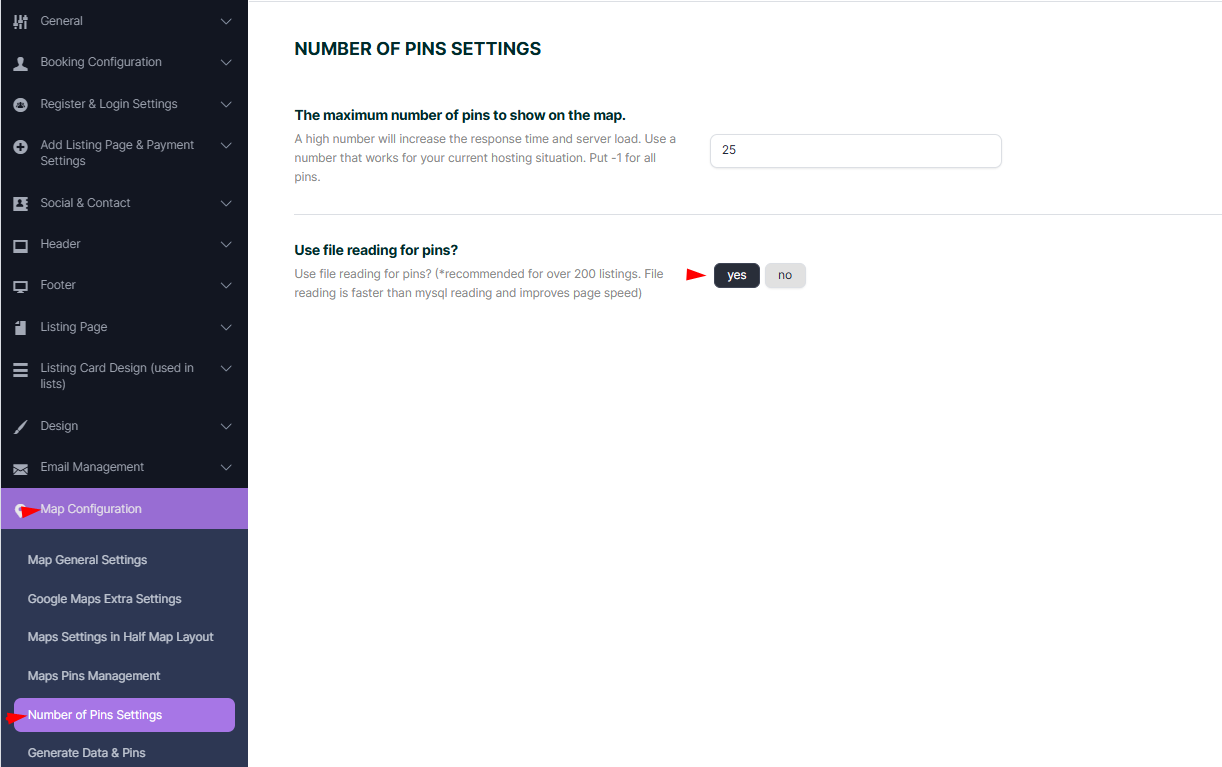
If your website has many properties, we recommend enabling Read from File for map pins.
This option is especially useful for websites with more than 200 properties.
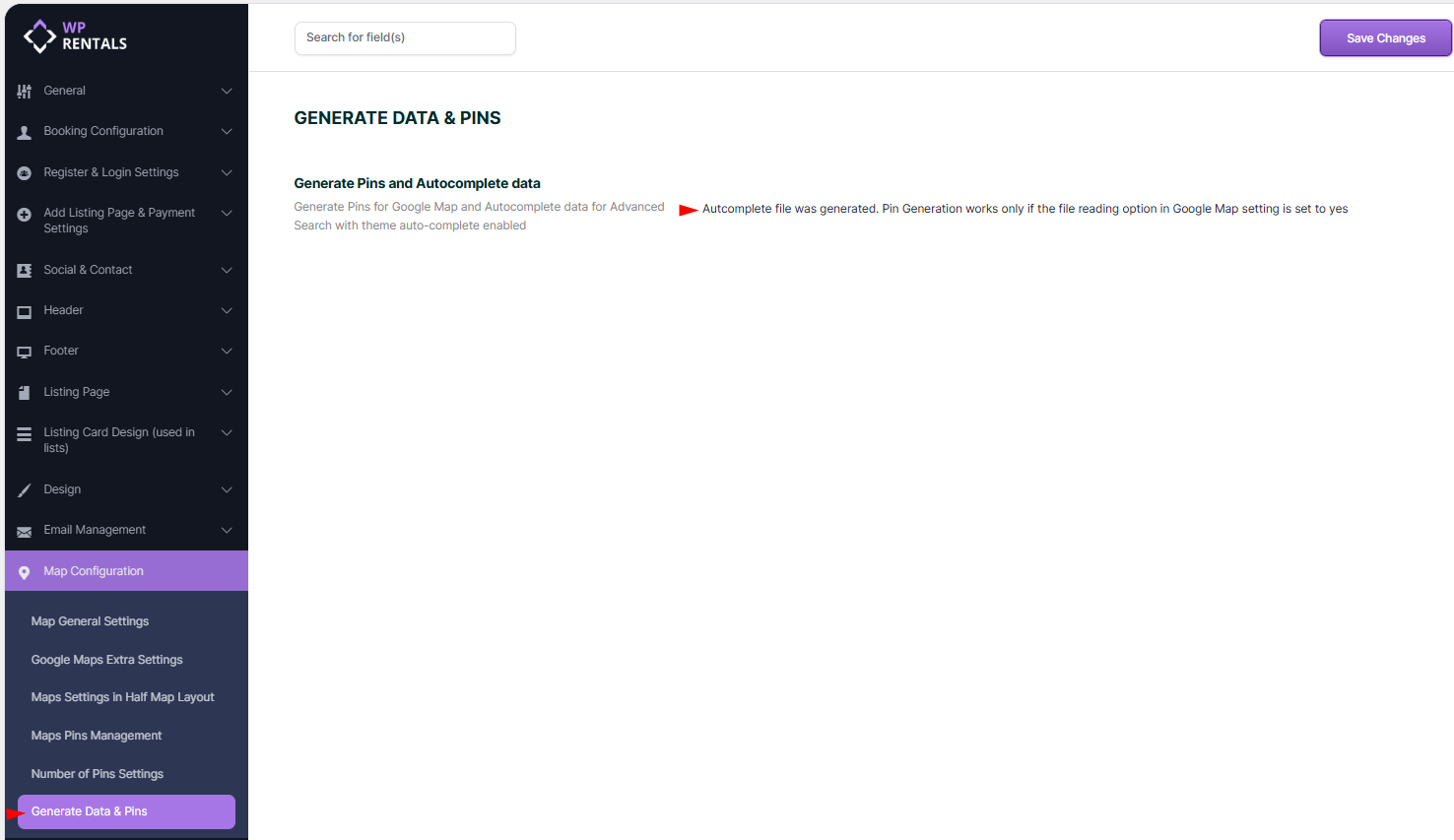
Instead of creating all pin data dynamically on every page load, the theme can read the pin information from a generated file, which helps reduce database load.
This can be generated manually with the Generate Pins button or automatically through cron.
Limit the Number of Pins on the Map
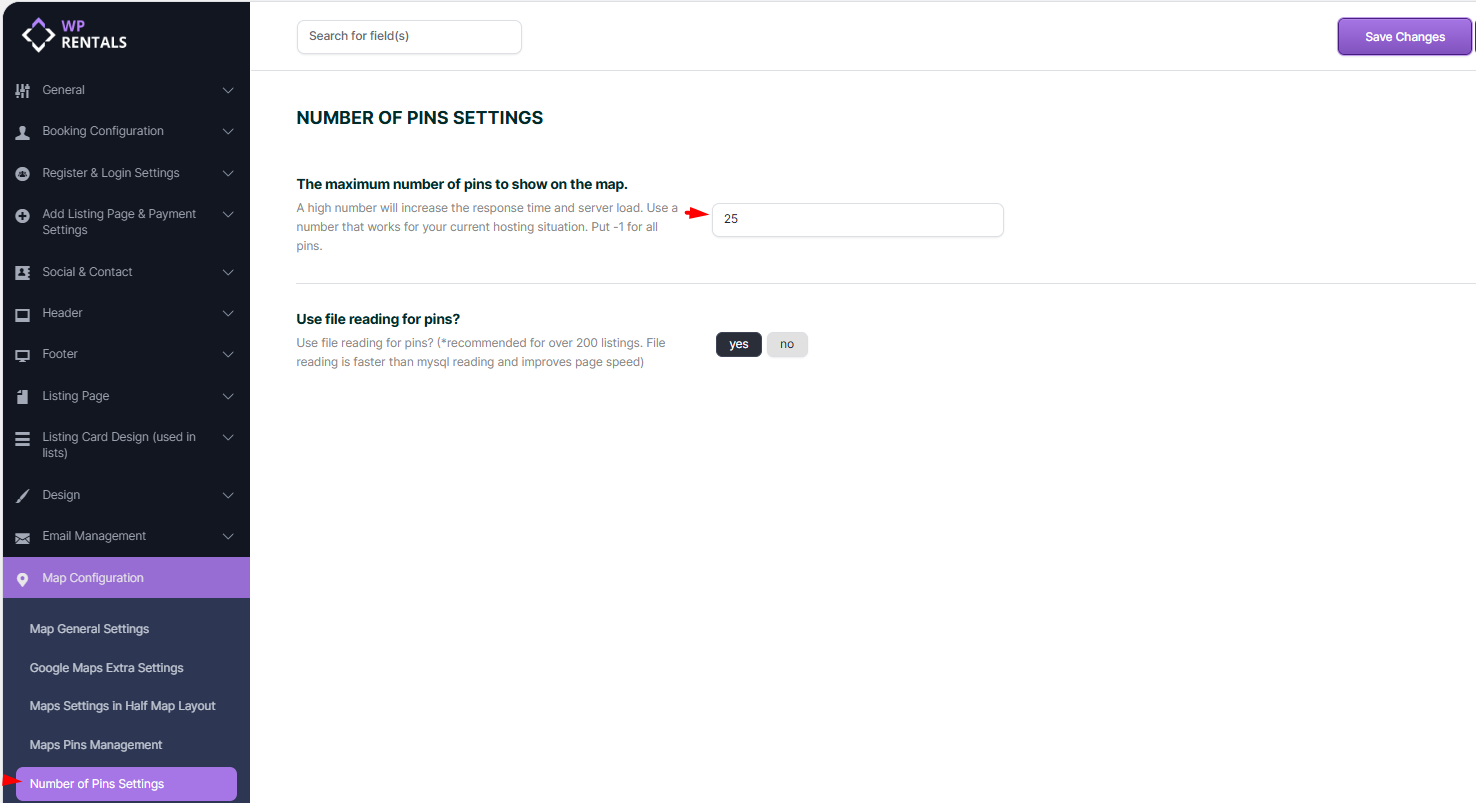
If Read from File does not apply to your setup, limit the maximum number of pins loaded on the map.
The number of pins should match your hosting resources and the number of properties on the website.
Loading too many pins at once can slow down map pages, search pages, and property list pages.
Use Good Hosting
Hosting quality has a direct impact on website speed.
A very cheap shared hosting plan is usually not ideal for a rental website with listings, maps, bookings, calendars, users, and payments.
For better performance, use hosting that offers enough CPU, RAM, PHP memory, database resources, and server-level cache.
For larger websites, managed WordPress hosting, VPS hosting, or cloud hosting is usually more reliable than low-cost shared hosting.
Use Server Cache or CDN When Available
If your hosting includes server cache, Redis, Memcached, object cache, or another caching system, use it carefully and test the website after enabling it.
You can also use a CDN such as Cloudflare to help cache static files and improve loading time for visitors from different locations.
After enabling server cache or CDN cache, always test dynamic areas such as:
- booking forms
- availability calendars
- login and register forms
- user dashboard pages
- checkout/payment pages
Remove Unnecessary Plugins
Every active plugin can add scripts, styles, database queries, or background processes.
Keep only the plugins you actually need.
If the website is slow, test the speed with only WPRentals and the required theme plugins active. Then enable additional plugins one by one and check the performance impact.
Be Careful With Optimization Settings
Some optimization settings can improve speed, but others can break functionality if they are too aggressive.
Be careful with options such as:
- delay JavaScript execution
- defer JavaScript
- combine JavaScript files
- minify JavaScript
- remove unused CSS
- combine CSS files
- lazy load background images
If one of these options breaks maps, booking forms, calendars, search, or Elementor sections, disable that specific option and clear cache.
Clear Cache After Changes
After changing theme options, cache settings, CSS/JS optimization, images, pins, or map settings, clear all cache layers.
- WPRentals theme cache
- WordPress cache plugin cache
- server cache
- CDN cache
- browser cache
Final Recommendation
For best performance, use the latest WPRentals version, enable the WPRentals theme cache, optimize images, configure map pins correctly, avoid unnecessary plugins, use good hosting, and test cache plugin options carefully.
Performance optimization should be done step by step. Do not enable many optimization settings at the same time, because it becomes difficult to know which setting caused a problem.